Tim Hortons Monster Energy Drinks: Caffeine & Flavours
Tim Hortons has started serving an energy drink built around another brand’s can. On October 21, 2026, Tims launched two Energy Infusr drinks, each made with a full can of Monster Energy Zero Ultra. They’re available for a limited time at participating restaurants across Canada, except in Quebec.
The drinks came out on the same day as the new Steak Farmer’s Wrap, so they got less attention than the steak. This guide covers what’s in each cup, how much caffeine you’re actually getting, what the “high caffeine” warning means, and what we know (and don’t know) about Quebec.
What the new Energy Infusr drinks are
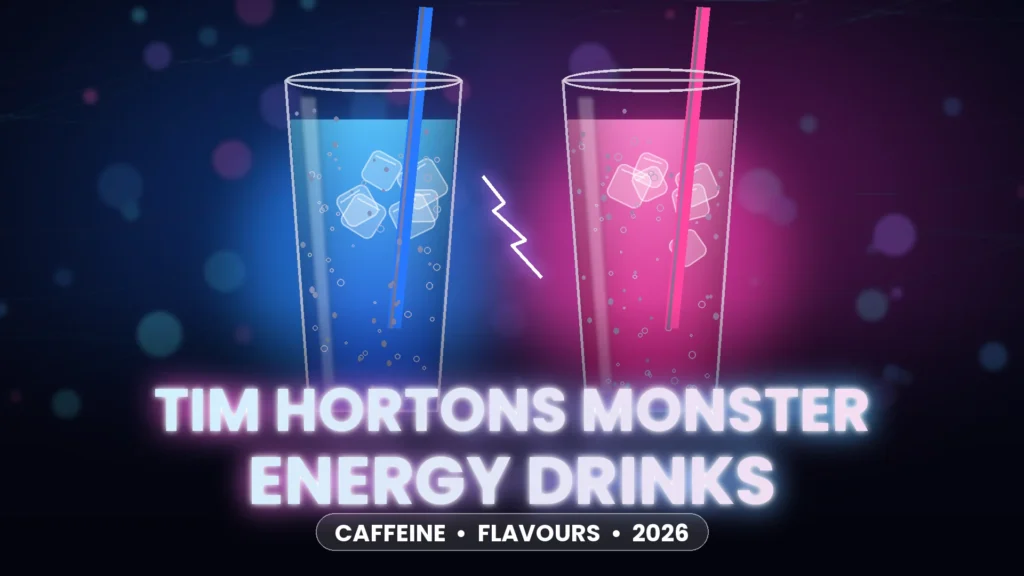
The staff makes each drink at the counter. According to Tim Hortons’ announcement, every one is handcrafted with a full 355 mL can of Monster Energy Zero Ultra, mixed with a fruit flavour and served cold.
The name has been used before. In July 2024, Tims sold Tim Hortons Infusr energy drinks in ready-to-drink cans, in Blackberry Yuzu and Mango Starfruit flavours, made with natural caffeine. The 2026 Energy Infusr is a different product. It’s mixed to order, and Monster Zero Ultra is the base.
Matthew Feaver, Head of Innovation for Tim Hortons, said the brand was excited to serve Monster Energy Zero Ultra “with two invigorating flavours that taste great – including a zero-sugar option.”
The two flavours
| Drink | Flavour | Sugar |
|---|---|---|
| Blue Energy Infusr | Blueberry raspberry | Not labelled zero sugar |
| Pink Energy Infusr Zero Sugar | Raspberry mojito | Zero sugar |
The base drink, Monster Zero Ultra, has no sugar of its own. Tim Hortons only calls the Pink version “Zero Sugar,” though, so the Blue version’s flavouring most likely adds sugar. If you’re watching your sugar, order the Pink one. Tims hasn’t posted calories or prices in the announcement, and both can vary by location, so check the Tims app for the restaurant you’re ordering from.
How much caffeine is in an Energy Infusr?
The announcement doesn’t give a caffeine total for either drink. The base, however, has a printed caffeine figure. The Canadian 355 mL can of Monster Energy Zero Ultra is labelled 105 mg of caffeine per can. Each Energy Infusr uses one full can, so a drink starts at about 105 mg. Tims hasn’t said that the fruit flavours add any caffeine.
Here’s how that compares with other things:
- Health Canada’s limit for adults: no more than 400 mg of caffeine a day.
- A medium Tim Hortons Original Blend coffee: about 205 mg by common third-party estimates (Tim Hortons doesn’t publish caffeine figures for its brewed coffee).
- The Health Canada cap for energy drinks: 180 mg of caffeine from all sources per serving.
Per cup, then, an Energy Infusr has roughly half the caffeine of a medium coffee. It’s easy to go over the daily limit if you have both, though. An Energy Infusr plus an Extra Large coffee (estimated at about 330 mg) comes to more than 400 mg.
What the “high caffeine” warning means
Every Energy Infusr comes with this note from Tim Hortons: “High caffeine content. This product may not be suitable for everyone.”
That wording is standard for energy drinks in Canada. Health Canada requires every caffeinated energy drink to carry the statement “high caffeine content.” It also says that children, people who are pregnant or breastfeeding, and people sensitive to caffeine should not drink them.
The warning is also about more than caffeine. On the Canadian label, Monster Zero Ultra lists taurine, panax ginseng root extract, guarana seed extract and several B vitamins, along with the sweeteners erythritol, sucralose and acesulfame potassium. If you avoid any of those, skip these drinks.
Why Quebec isn’t getting them
Tim Hortons hasn’t explained why Quebec is left out. Its announcement only says the drinks are available “across Canada (excluding Quebec).” Any site that tells you the exact reason is guessing.
One recent change is relevant, though. On June 11, 2026, Quebec passed Bill 9, An Act to prevent the harmful effects of energy drinks on the health of young people. According to the Retail Council of Canada, the law takes effect on December 11, 2026. It makes Quebec the first Canadian province to ban selling energy drinks to anyone under 16.
Under Bill 9, an energy drink is a beverage with at least 150 mg of caffeine per litre that also contains ingredients such as taurine, vitamins or minerals. Coffee and tea don’t count. Monster Zero Ultra has about 296 mg of caffeine per litre (105 mg in 355 mL) and contains taurine, so the can itself fits that definition. The law also requires sellers to ask for ID, and it bans selling energy drinks to anyone who isn’t physically present. That rules out delivery and online orders.
A limited-time drink that launches seven weeks before those rules take effect would need age checks at the counter and different handling for app and delivery orders in one province. That could explain why Tims left Quebec out. We can’t confirm it was the reason.
How long will they be around?
Tims calls both drinks limited-time but hasn’t announced an end date. In past years the holiday lineup has arrived in mid-November, so festive drinks may soon compete with the Energy Infusr for menu-board space. Our tim hortons holiday menu 2026 page will show the new lineup as soon as Tim Hortons confirms it.
Quick answers
Are the Energy Infusr drinks sold in the U.S.?
The October 21 announcement covers Canada only (excluding Quebec).
Is the Pink Energy Infusr really sugar-free?
Tim Hortons sells it as “Zero Sugar,” and Monster Zero Ultra has 0 g of sugar.
Can teenagers order one?
Health Canada says children shouldn’t drink caffeinated energy drinks. In Quebec, where these drinks aren’t sold anyway, selling energy drinks to anyone under 16 will be illegal from December 11, 2026.
Is it stronger than coffee?
No. It has about 105 mg from the can, while a medium brewed coffee has an estimated 205 mg.
For prices, calories and caffeine for every other item, see our full Tim Hortons Menu guide.